
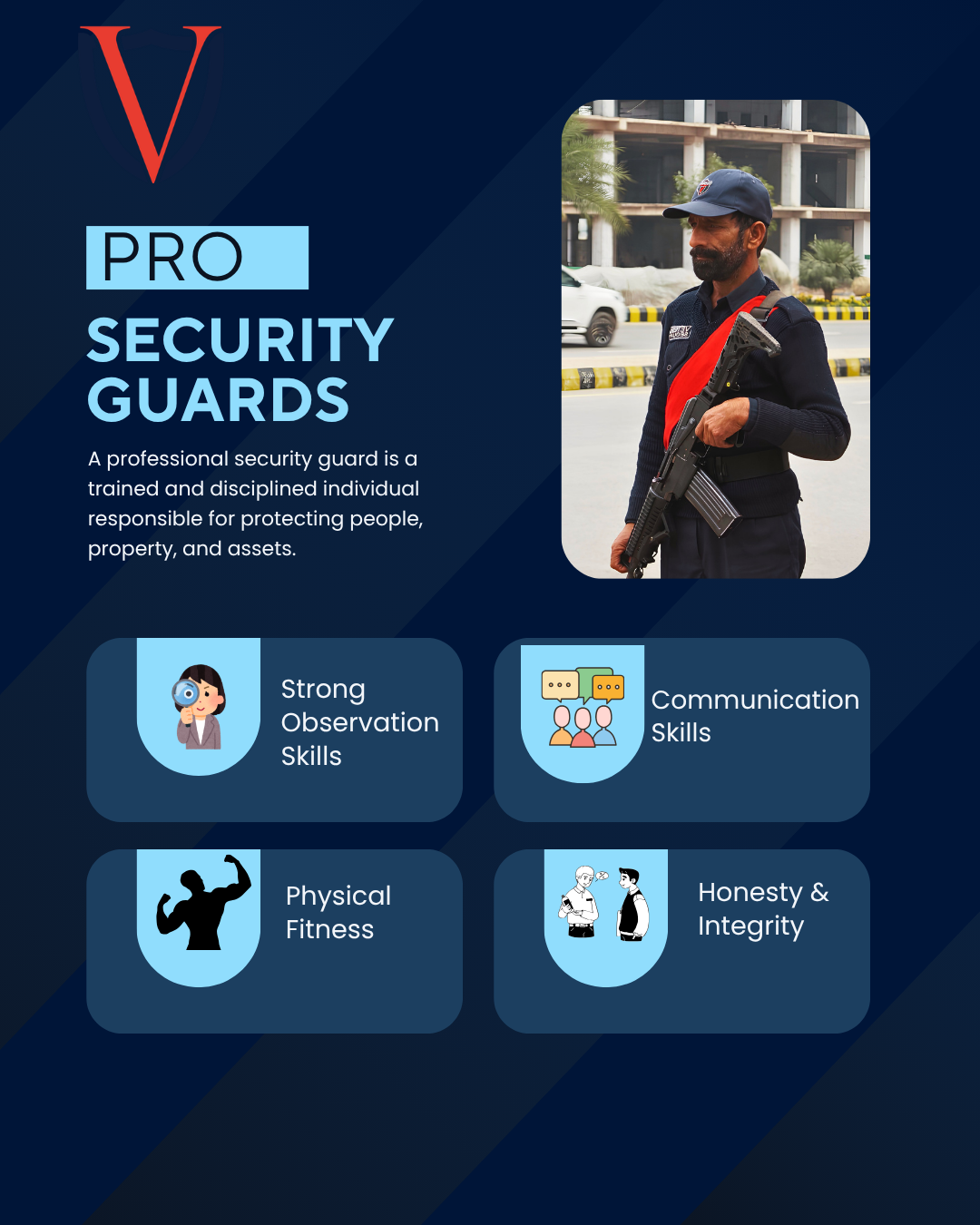
In today’s fast-paced world, businesses face increasing risks—unauthorised access, theft, workplace disputes, vandalism, and emergencies. To handle these challenges, every company needs a professional security guard, not just someone standing at the gate. A highly skilled guard brings discipline, awareness, confidence, and fast responses that protect your people, property, and reputation. But what truly makes a security guard “professional”?
What skills, habits, and traits separate an average guard from an exceptional one?
This blog explores the essential qualities every business owner should look for when hiring a security guard.
- Strong Observation Skills
One of the most essential qualities of a professional security guard is the ability to observe and assess situations with exceptional attention to detail. Security is not only about standing at an entrance or monitoring cameras; it is about constantly remaining alert to everything happening within the environment. A professional security guard notices unusual movements, unauthorised individuals, suspicious behaviour, unattended objects, or vehicles parked in unusual locations for extended periods of time. These observations may appear minor to others, but they can often be the first warning signs of a potential security threat. Through continuous monitoring of CCTV systems, entry and exit points, and surrounding areas, a guard develops situational awareness that helps prevent incidents before they escalate. A professional security guard also knows how to observe discreetly without creating panic or drawing unnecessary attention while maintaining professionalism and calmness under pressure. Strong observation skills enable guards to identify risks early, respond quickly, and report unusual activities accurately to supervisors or law enforcement authorities. In many situations, careful observation and timely reporting are what stop security breaches, theft, violence, or emergencies before they occur, making this skill one of the foundations of effective security services.
- Excellent Communication Skills:
A professional security guard must possess excellent communication skills, as they interact daily with employees, visitors, clients, vendors, and management. Effective communication is not only about speaking clearly; it is about creating a secure, respectful, and organised environment. A professional guard greets visitors politely and professionally, making people feel welcomed while maintaining security protocols. They provide instructions confidently and calmly during routine operations as well as emergency situations, ensuring that everyone understands procedures without confusion or panic.
In critical moments, a professional security guard must be able to report incidents accurately, giving precise details to supervisors, law enforcement, or emergency responders. Quick and clear communication is also essential when calling for backup or responding to security threats, where even a few seconds can make a major difference. Additionally, guards are responsible for preparing written reports with clarity and professionalism, documenting incidents, observations, and daily activities in a manner that supports accountability and legal compliance. Strong communication skills help build trust, improve coordination, reduce misunderstandings, and maintain order within the business environment.
- Physical Fitness & Alertness
A professional security guard must maintain a high level of physical fitness and mental alertness to perform duties effectively in demanding environments. Security responsibilities often require standing for extended hours, patrolling large premises, monitoring suspicious activities, responding quickly to emergencies, and occasionally handling aggressive or dangerous situations. These tasks cannot be performed efficiently without proper stamina, focus, and discipline.
A well-trained professional security guard maintains strong physical endurance, remains mentally attentive throughout shifts, and possesses quick reflexes to react immediately when a situation arises. Alertness is one of the most critical qualities in the security profession because even a few seconds of delay can increase risks during emergencies. Guards who stay active, observant, and prepared are better able to protect people, property, and assets.
In contrast, a guard who appears exhausted, distracted, or physically unfit may struggle to respond effectively during critical incidents. This is why professional security companies value guards who consistently maintain their health, sharp judgement, and readiness to take action whenever required.
- Honesty & Integrity
Honesty and integrity are among the most essential qualities of a professional security guard. Security personnel are often entrusted with access to sensitive areas, confidential information, valuable assets, and the overall safety of people and property. Because of this responsibility, trust is non-negotiable in the security profession. A professional security guard must maintain complete confidentiality regarding company operations, client information, and internal activities. Accurate and truthful reporting is equally important, as even minor misrepresentation can lead to serious security risks or operational failures. Professional guards are also expected to remain impartial, avoiding favouritism, personal bias, or unfair treatment while carrying out their duties. Their responsibility is to protect property, employees, visitors, and assets with honesty, discipline, and accountability at all times. Integrity in security services not only prevents internal threats and misconduct but also builds confidence, reliability, and long-term trust between clients and security professionals.
- Conflict Resolution & Problem-Solving
A professional security guard must possess strong conflict-resolution and problem-solving skills, as guards regularly face disputes, confrontations, emergencies, and high-pressure situations. The ability to remain calm under stress is one of the most important qualities of a professional guard. Instead of reacting emotionally or aggressively, a trained guard handles situations with patience, discipline, and confidence.
A professional security guard uses effective verbal de-escalation techniques to reduce tension and prevent conflicts from becoming violent. Through clear communication, respectful behaviour, and quick decision-making, guards can calm angry individuals and restore order while maintaining safety for everyone involved. Their role is not to create fear or panic, but to keep situations under control in a professional and lawful manner.
In challenging situations, a professional security guard focuses on finding practical solutions that protect people, property, and the reputation of the organisation they serve. Whether dealing with unauthorised access, workplace disputes, or emergency incidents, professional guards act responsibly and think critically before taking action. A true professional security guard resolves problems peacefully whenever possible and demonstrates professionalism, maturity, and self-control at all times.
- Quick Decision-Making
One of the most important qualities of a professional security guard is the ability to make quick and effective decisions under pressure. Security situations can change within seconds, and the response of a guard during those critical moments can determine whether an incident is controlled or escalates into a serious threat. A trained guard must remain calm, alert, and mentally prepared to assess situations instantly while choosing the safest and most professional course of action.
A professional security guard understands when to allow or deny entry based on security protocols, visitor behaviour, and potential risks. During emergencies such as fires, medical incidents, or security threats, guards must coordinate safe evacuations quickly and efficiently to protect lives and prevent panic. They are also responsible for recognising situations that require immediate support from emergency services, including the police, the ambulance, or the fire department.
In addition, a professional security guard must be capable of identifying suspicious behaviour, monitoring unusual activities, and responding before situations become dangerous. Strong judgement, situational awareness, and the ability to think clearly under pressure are what separate an experienced security professional from an untrained guard. In the security industry, quick decision-making is not just a skill—it is a responsibility that directly impacts the safety of people and property.
- Knowledge of Safety Protocols & Emergency Procedures
A professional security guard must possess strong knowledge of safety protocols and emergency response procedures to effectively protect people, property, and assets during critical situations. Emergencies can occur without warning, and a well-trained guard is expected to respond quickly, calmly, and professionally under pressure. This includes understanding fire safety procedures, guiding occupants during evacuations, and operating fire extinguishers and alarm systems correctly to minimise risk and damage.
In situations involving earthquakes or other natural disasters, a professional security guard must know the proper emergency protocols to ensure the safe movement and protection of individuals within the premises. Guards should also be trained in first aid and CPR so they can provide immediate assistance before medical professionals arrive. Their ability to respond to medical emergencies can often save lives during the most critical moments.
Additionally, a professional security guard must be capable of handling violent incidents, unauthorised intrusions, theft attempts, or break-ins with discipline and situational awareness. Proper training in emergency communication, crowd control, and incident management allows guards to maintain order and reduce panic during high-risk situations. A prepared and knowledgeable security guard not only prevents serious damage and financial loss but also plays a vital role in ensuring public safety and confidence.
- Professional Appearance & Discipline
A professional security guard represents the first line of confidence, safety, and discipline for any organisation, property, or community. Appearance plays a major role in creating trust and authority because the way a guard presents themselves often shapes the public’s first impression of the entire security system. A well-dressed and disciplined guard reflects responsibility, alertness, and professionalism.
A professional security guard always maintains a clean and properly fitted uniform that reflects pride in duty and respect for the organisation they serve. Proper grooming, including neat hair, personal hygiene, and a well-maintained appearance, demonstrates self-discipline and readiness for professional responsibilities. Attention to small details such as polished boots, organised accessories, and properly maintained equipment further strengthens a guard’s professional image.
In addition, a professional security guard carries essential items such as registers, torches, whistles, radios, and other security tools in a neat and organised manner, ensuring quick accessibility during emergencies or routine operations. Punctuality is equally important, as arriving on time and strictly following duty schedules reflects reliability, commitment, and respect for operational procedures.
Ultimately, discipline in appearance is closely connected to discipline in performance. A professional security guard who maintains high standards in presentation is more likely to perform duties with confidence, responsibility, and professionalism, creating a safer and more secure environment for everyone.
- Understanding of Technology & Surveillance Systems
In today’s rapidly evolving security environment, a professional security guard must possess a strong understanding of modern technology and surveillance systems. Security operations are no longer limited to physical patrolling alone; they now depend heavily on advanced monitoring and communication tools that enhance efficiency, accuracy, and response time. A well-trained professional security guard should be capable of operating CCTV monitoring systems to observe suspicious activity, identify potential threats, and maintain continuous situational awareness. Knowledge of access control systems is equally important, as guards are responsible for regulating entry and exit points, verifying authorised personnel, and preventing unauthorised access to restricted areas.
Additionally, a professional security guard must be trained in the use of metal detectors and alarm panels to detect security breaches, prohibited items, or emergency situations quickly and effectively. Communication devices such as walkie-talkies, mobile applications, and digital reporting systems also play a critical role in ensuring coordination between security teams and management. The ability to use these technologies professionally allows guards to respond faster during emergencies and maintain a higher level of operational control. In the modern security industry, a technologically skilled professional security guard is far more effective and reliable than one who relies solely on physical presence, as technology-driven security measures have become essential for protecting people, property, and assets.
- Customer Service Mindset
A professional security guard is often the first person visitors, clients, and employees encounter when entering a facility. Because of this, their attitude, communication style, and behaviour directly influence the public image of the organisation they represent. A professional security guard must demonstrate courtesy, patience, and respect in every interaction, regardless of the situation or the individual involved. Beyond maintaining safety, security personnel should be capable of providing clear directions, assisting visitors when needed, and responding to enquiries in a helpful and professional manner.
In challenging or tense situations, a professional guard must remain calm, composed, and emotionally controlled, ensuring that conflicts are managed without escalating unnecessary stress or panic. Strong customer service skills help create an environment where staff, guests, and clients feel welcomed, respected, and secure. Ultimately, excellent customer service from security personnel strengthens public trust, enhances the reputation of the organisation, and reinforces the importance of a professional security guard as both a protector and a representative of professionalism.
- Strong Accountability & Reporting Skills
Professional security guards understand that effective security is built not only on physical presence but also on accurate documentation and accountability. In every professional security guard operation, detailed reporting plays a critical role in maintaining safety, tracking activities, and ensuring transparency between guards, supervisors, and clients. A well-trained professional security guard maintains organised daily activity reports, visitor logs, incident reports, night patrol records, and equipment checklists to ensure that every important detail is properly recorded and monitored.
These reports provide business owners and management teams with valuable insights into daily operations, potential risks, security incidents, and staff performance. Accurate documentation also helps identify patterns, improve response strategies, and support investigations whenever required. Whether monitoring access points, conducting patrols, or handling emergencies, a professional security guard understands that clear and timely reporting is essential for maintaining operational efficiency and strengthening overall security standards.
- Conclusion
A professional security guard is far more than an individual wearing a uniform. They are trained protectors who combine vigilance, discipline, communication skills, accountability, and sound judgement to safeguard people, property, and assets. The presence of a professional security guard creates confidence, order, and reassurance within any environment, whether residential, commercial, industrial, or corporate.
Organisations that invest in highly trained professional security guards benefit from stronger protection, improved incident prevention, better emergency response, and enhanced public trust. When equipped with the right training, tools, and professional qualities, a professional security guard becomes one of the most valuable assets a company can have—serving not only as a protector but also as a reliable representative of safety, professionalism, and responsibility.

No comment