
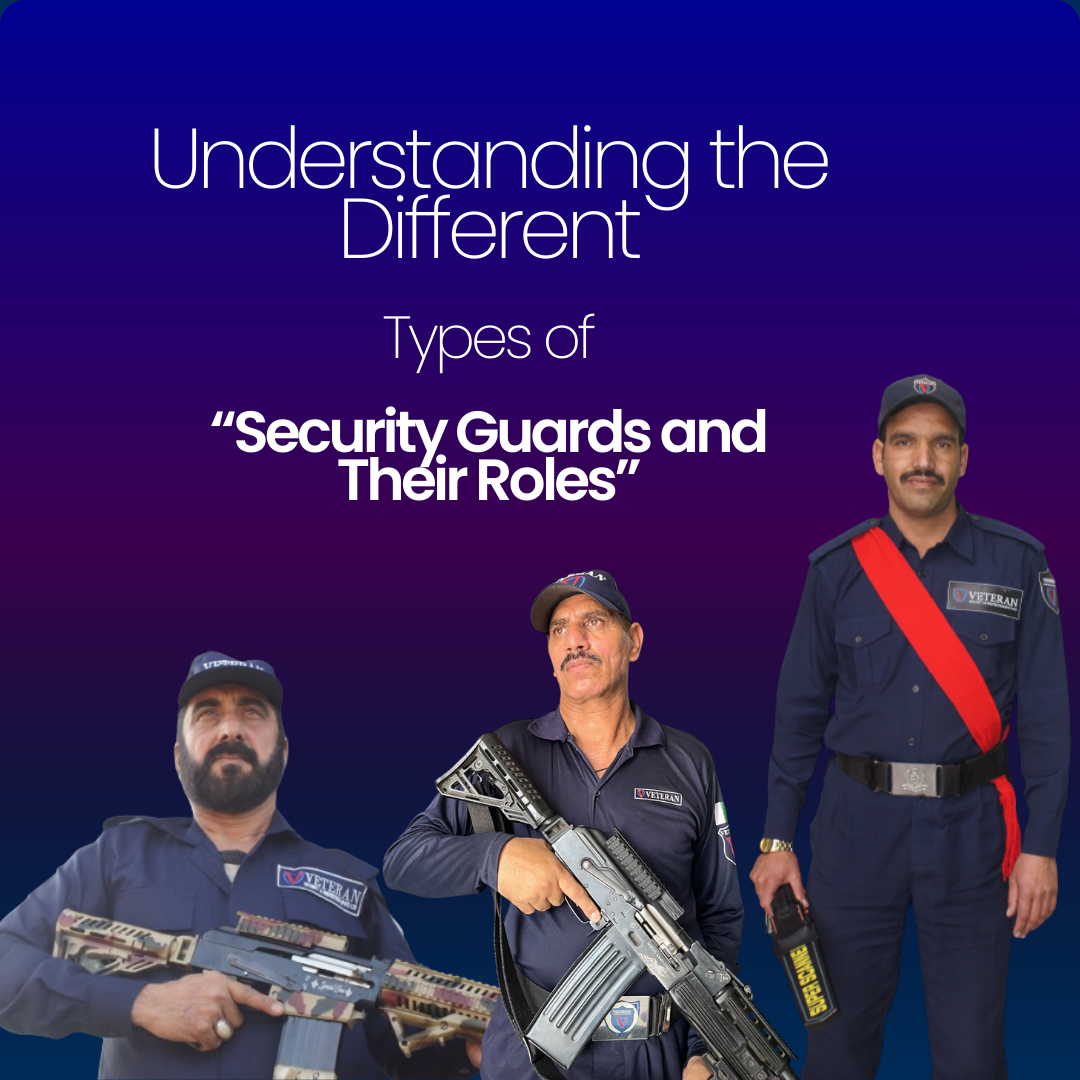
Introduction:
A security guard, also known as a security officer, is a person who is paid to protect property, people, or information. Security guards are usually employed by private security companies, but they can also work for government agencies or organisations, or be hired directly by individuals. Typically, security guards perform static duties in certain designated areas. Additionally, when required, they can also carry out patrolling duties in times of need.
Duties of a Security Guard
The duties of a security guard vary depending on their employer and the specific job site, but they typically include:
- Patrolling an area
- Monitoring security cameras
- Writing reports about incidents and occurrences
- Screening people who come into the building, such as employees or customers
- Controlling access to restricted or sensitive areas
- Responding promptly to alarms and emergency situations
- Enforcing company policies and safety procedures
- Conducting routine safety inspections of the premises
- Assisting during evacuations or emergency drills
- Reporting safety hazards or suspicious behavior
- Coordinating with law enforcement or emergency services when required
- Providing customer assistance and directions when needed
- Monitoring fire panels and safety systems
- Securing doors, gates, and perimeter fencing
- Maintaining entry and exit logs
Types of Security Guards
Presently, over 800 private security organisations are registered in Pakistan, providing security guard services to various entities. These security companies maintain proper recruiting frameworks, monitored under the guidelines and regulations set by the Ministry of Interior Pakistan. Next, we will discuss each type of security guard in detail.
Ex-serviceman Security Guards
In general, security guards are distinguished by their background; a more preferable guard is one with a serviceman or veteran background. A guard retired from the Pakistan military, Police, Rangers, FC, or any other law enforcement agency is called an ex-serviceman security guard. These guards have greater potential to handle security matters, as they received thorough training during their service and are also familiar with the use and handling of arms.
Advantages of hiring an Ex-serviceman Security Guard
- Professionally trained in law enforcement departments
- Have experience serving in security divisions
- Can handle all kinds of weapons
- Knowledgeable about security matters
- Skilled at handling the general public and crowds
- Focused and reliable
- Trained to work long hours in various climates
- Able to perform static or patrolling duties
The only issue with ex-servicemen guards is their age, as they are typically in their late 40s or early 50s.
Civilian Security Guards
A security guard who has not served in any law enforcement agency, but is willing to serve in security work after receiving professional training from a law enforcement department, is called a Civilian security guard. During training, they learn how to handle various security situations, gain knowledge about security matters, and receive instruction in the handling of arms and weapons. They also undergo full preparation for shooting different types of firearms.
The civilian security guard must possess training certifications from their training division. Veteran Security & Protection Pvt Ltd hires civilian security guards who hold all required training certificates and have at least 5 years of experience in the security industry. This minimum 5‑year requirement is mandatory for employment at VSP Pvt Ltd.
Advantages of hiring a Civilian Security Guard
- Certified Training
- Can perform static duties for longer hours
- Suitable for ceremonial roles
- Young and within the desired age bracket
- Can read and write basic English
- Kind-hearted and reliable
- Can perform static or patrolling duties
- Can manage event security very efficiently
- Public‑friendly behavior
Armed & Unarmed Security Guards
As the name suggests, armed security guards are those authorized to use weapons in their security duties. They are professionally trained in shooting and handling various types of weapons. In an emergency, they are permitted to fire warning shots to de-escalate a situation. In certain cases, they may also use their weapon to protect life or valuable assets. Conversely, an unarmed security guard does not carry a weapon during duty but may use metal detectors or other security gadgets to perform effectively. However, it is important to note that unarmed guards still undergo weapon‑handling training, as all security guards must complete this instruction.
At Veteran Security & Protection Pvt Ltd, every security guard receives weapon‑handling training and participates in firing drills during basic training.
Close Protection Officers (CPOs)
A security professional hired to protect a client, their principal, assets, or information while in movement is called a Close Protection Officer (CPO).
These guards differ from typical security guards in several ways, most notably, they protect their principal during travel. They accompany the client across cities and even countries to safeguard against security threats. To operate at this level, they undergo rigorous training programs. In the security industry, CPOs are often referred to as bodyguards or personal guards.
CPOs generally come from commando‑trained backgrounds within designated agencies. In Pakistan, the most suitable candidates are often retired Special Services Group (SSG) commandos. Extensive training and operational experience during their careers prepare them uniquely for CPO roles.
Personnel retired from forces such as the Anti‑Terrorist Squad (ATS), Police, Rangers, and FC are also eligible for CPO duties.
Advantages of hiring a Close Protection Officer
- Highly trained through extensive and rigorous programs
- Mentally sharp and highly focused
- Professional in weapon handling and stealth
- Able to sense threats in their surroundings
- Knowledgeable in movement protocols
- Skilled drivers
- Remain calm and composed under pressure
Difference between a Security Guard and a Close Protection Officer (CPO)
The differences between typical security guards and Close Protection Officers are clear and significant. Although people often confuse the two roles, they are distinct in practice.
A typical security guard performs duties within a designated area or patrols a defined perimeter. Often called static guards, they remain stationed at a location. Conversely, CPOs are professionally trained bodyguards who specialize in mobile protection. They stay with their principal, provide security during travel and public events, and proactively identify potential threats.
Attire
A security guard usually wears a navy‑blue uniform, while a CPO typically wears a three‑piece suit or safari suit during movement duty.
Weapons
A security guard may carry larger weapons such as rifles or MP5s, generally up to 12‑bore or 9mm calibers. In contrast, a CPO carries a concealed weapon like a Glock 9mm pistol. CPOs avoid large firearms during movement to ensure swift response and discreet threat detection, as conspicuous weapons can increase risk during travel.
Training
Security guards receive training focused on protecting a fixed site, including basic fire‑response drills. Alternatively, CPOs undergo extensive training to handle emergencies during movement, including advanced threat detection and heightened situational awareness. They are also trained to arm and disarm weapons rapidly and are conditioned to be mentally and emotionally resilient.
Authority & Licensing
A security guard’s weapon authority is limited to their duty site. However, a CPO holds all‑Pakistan weapon authority, as they travel across cities and various locations.
Duty Hours
Security guards generally work 8‑ or 12‑hour shifts depending on client needs. Meanwhile, CPOs typically work up to 8 hours, though longer assignments such as road travel may require extended duty periods.
Wages
Security guards usually receive wages set according to government minimums. Conversely, CPOs are paid based on assignment complexity, travel requirements, and risk level.
Holidays
A typical security guard may receive up to 4 days off (ex‑servicemen) or 2 days off (civilian background). In comparison, CPOs have more frequent time off when their principal is not traveling.
Gender
The CPO role is open to all genders. Veteran Security & Protection Pvt Ltd employs highly trained female CPOs to serve female clients, with qualifications and training equal to those of their male counterparts.
Lady Searchers
Lady searchers are the female counterparts of static security guards. In large shopping malls, plazas, hospitals, and at public gatherings or events, they manage female entry and exit points. Their core duty is to inspect belongings and accessories carried by females, ensuring thorough checks for smooth security operations.
Veteran Security & Protection Pvt Ltd provides the industry’s finest lady searchers. We cover all your events and public gatherings with the highest focus and vigilance. Furthermore, our lady searchers are properly trained and fully equipped to meet all your security needs.
Bouncers
Bouncers are employed to provide security at large public events and shopping centers. They do not use weapons or gadgets; instead, they rely on physical strength to control crowds and maintain order in public areas. Additionally, bouncers are utilized for special events.
Veteran Security & Protection Pvt Ltd provides the industry’s finest bouncers. We cover all your events and public gatherings with the utmost focus and vigilance. Furthermore, our bouncers are properly trained and physically equipped to meet all your security needs.
Traffic Valets/Controllers
Another type of security guard, their core duty is to manage traffic. They serve as traffic wardens at shopping malls, hotels, and public or private gatherings. They are specially trained and possess excellent driving skills to meet all traffic needs.
Veteran Security & Protection Pvt Ltd provides the best traffic controllers to cover all your public events, ensuring smooth traffic flow without disruptions.
Access Control and CCTV Monitoring
A specialized type of security guard manages access control and monitors all on‑site activities through CCTV screens. These guards are professionally trained to watch CCTV footage and take necessary action when required. They remain in contact with on‑site security guards, acting as an extra layer of security and providing additional oversight behind the screens.
Through technology and focused monitoring, the site remains protected at all times.
Veteran Security & Protection Pvt Ltd always recommends blending technology with human effort. This powerful combination ensures optimal security.
Quick Response Forces (QRFs)
Most security companies provide Quick Response Force (QRF) teams. These teams consist of armed security guards trained to handle any kind of security combat. The guards receive thorough training to manage all types of security situations, and they possess extensive knowledge of weapons and combat shooting techniques. Furthermore, the hiring criteria for such security guards vary from company to company.
A QRF team maintains constant communication with CCTV monitoring guards and operates based on their alerts. Whenever the CCTV team observes unusual activity at a site, they immediately notify the QRF team, which then responds without delay. The QRF team also stays in direct contact with the head office and can act on centralized instructions. These teams are especially effective in areas where AI‑enabled security is deployed—such as locations where cameras act as the primary security guards.
Conclusion
Understanding the different types of security guards available helps you choose the right protection for your needs. Each guard type from ex‑servicemen and civilian guards to CPOs, lady searchers, bouncers, traffic controllers, CCTV monitors, and QRF teams brings specialized skills to ensure safety and order. Veteran Security & Protection Pvt Ltd provides trained, reliable security guards tailored to your specific security requirements.

These are actually great ideas in on the topic of blogging. You have touched some fastidious factors here. Any way keep up wrinting.