
Introduction:
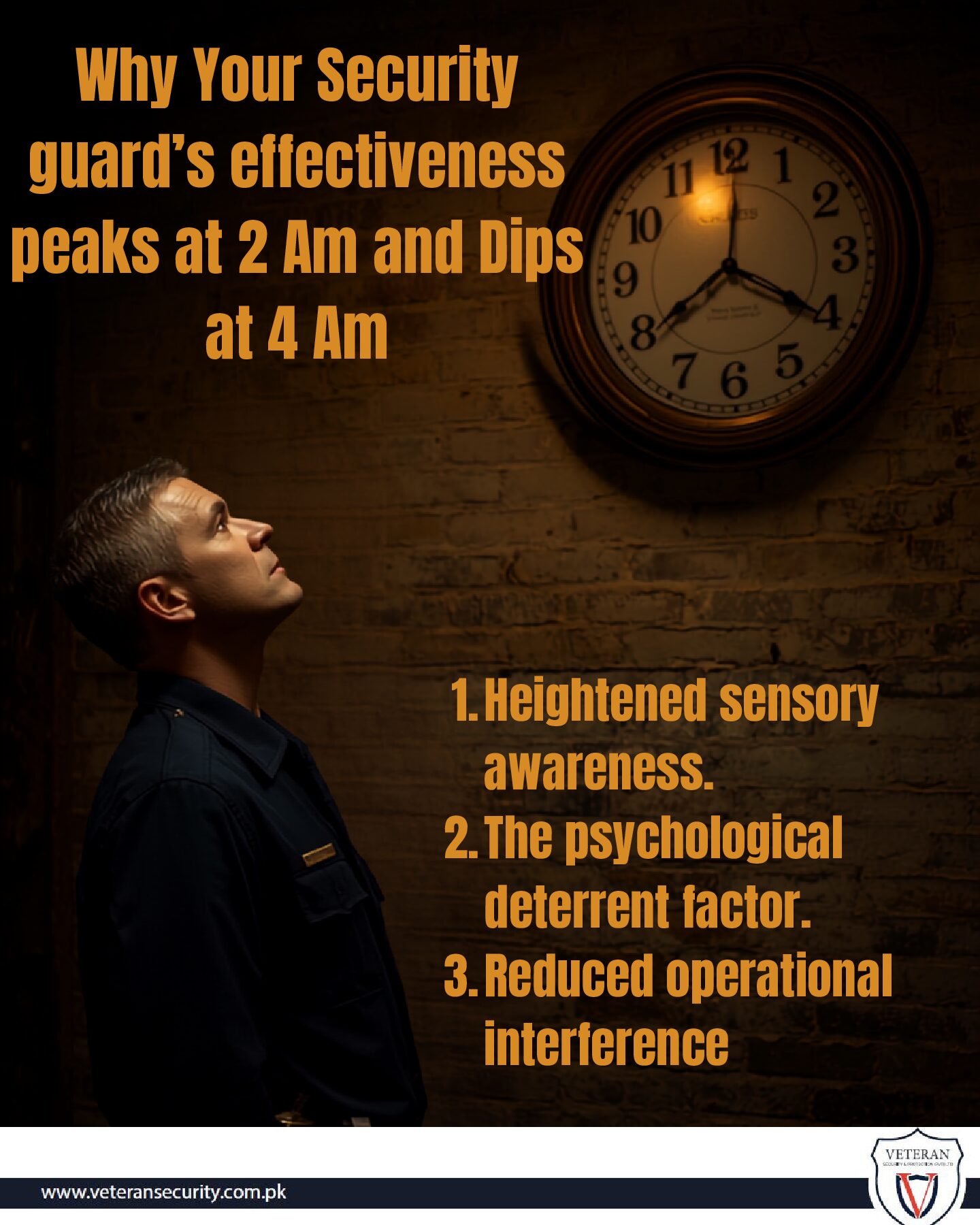
If you have ever managed a security team or worked a night shift yourself, you have likely noticed an unsettling pattern. At around 2 AM, your guards appear sharp, alert, and responsive. But by 4 AM, eyes grow heavy, reactions slow, and the radio goes quiet. This is not a coincidence; it is biology.
The human body operates on a 24-hour internal clock known as the circadian rhythm. This rhythm dictates when we feel awake and when we feel sleepy. For security guards working through the night, understanding this cycle is not just useful; it is critical to maintaining safety and reducing risk. Effective security guard fatigue management begins with acknowledging that human alertness follows a predictable curve, and that curve has serious implications for your business.
Research has confirmed that night shift performance is noticeably worse than day shift performance. One major study analysing over four million behavioural responses from security officers at an international airport found that processing times followed the circadian rhythm of attention, directly affecting real-life job performance. This means the guards protecting your assets are fighting an internal battle against their own biology every single night.
The Science of the Circadian Rhythm: Why 2 AM Is a Peak:
To understand why effectiveness peaks at 2 AM, we must first understand how the circadian rhythm operates. During a typical day, attention levels follow a predictable pattern: a morning drowsiness phase, an early peak, a post-midday dip, a late-day peak, and a rapid decline during the nighttime hours.
For a guard who has been awake since the afternoon and started their shift in the evening, 2 AM represents a window where their body has adjusted to the night. It is the “late-night peak” of attention, a period when the body has temporarily adapted to the late hours and is still functioning relatively well. However, this peak is short-lived.
By 4 AM, the body’s drive for sleep reaches its maximum intensity. This is the point where the circadian rhythm pushes hardest for rest. The body temperature drops, melatonin levels peak, and cognitive function declines sharply. For a security guard, this is the most dangerous time of the entire shift.
The 4 AM Danger Zone: What Research Reveals:
The 4 AM dip is not just anecdotal; it is scientifically documented. The same airport security study found that false alarm rates were higher during night and early morning shifts compared to standard morning shifts. This means that while guards may not miss major threats (hit rates remained similar), they became more prone to errors in judgement. They saw threats that were not there, leading to unnecessary escalation or wasted time.
Why does this matter for security guard fatigue management? Because a guard who is making mistakes at 4 AM is a guard who is impaired. They may misidentify a friendly employee as an intruder, fail to notice a subtle sign of a break-in, or simply not process information quickly enough to prevent an incident.
The problem is compounded by sleep deprivation. A study on shift workers found that sleep duration was significantly lower during night shifts (averaging just 4.02 hours) compared to morning shifts (5.81 hours). Guards working night shifts are chronically sleep-deprived, and this cumulative fatigue magnifies the 4 AM dip. By the end of a week of night shifts, a guard’s cognitive performance may be equivalent to being legally intoxicated.
The Hidden Costs of Fatigue: Beyond Just Tiredness:
Poor security guard fatigue management does not just affect alertness; it carries real financial and legal risks. Consider the following:
1. Increased False Alarms
A fatigued guard is more likely to call in false alarms. Each false alarm wastes police resources, disrupts business operations, and damages your reputation with clients.
2. Missed Threats
While research suggests hit rates may remain stable, the reality of extended shifts and poor scheduling tells a different story. Industry professionals have observed that guards on 12-hour static shifts become less sharp in the 9th or 10th hour, leading to slower reactions and missed threats. Thieves are aware of this and will wait for the perfect moment to strike.
3. Health Risks for Guards
Night shift work disrupts the normal blood pressure cycle. Research has shown that night shift workers experience a reduced “dipping” of blood pressure during sleep, which is associated with an increased risk of stroke, organ damage, and cardiovascular disease. A healthy guard is a sharp guard; chronic fatigue leads to burnout, turnover, and higher recruitment costs.
4. Legal Liability
If an incident occurs because a guard was too fatigued to respond effectively, your company could face negligence lawsuits. Demonstrating that you have a robust security guard fatigue management policy is a critical defence.
Practical Strategies for Security Guard Fatigue Management:
Effective security guard fatigue management requires a combination of smart scheduling, environmental design, and proactive health support. Here is what you can implement today:
1. Rotate Guards Regularly
Rotating guards regularly is the single most effective operational tactic in security guard fatigue management, as it directly counters the monotony and physical stagnation that dulls situational awareness during long static posts. When a guard remains stationed at the same doorway, reception desk, or parking booth for hours on end, their brain enters a state of habituation where the environment becomes so familiar that the mind stops actively processing visual and auditory stimuli, effectively creating dangerous blind spots. By implementing structured rotations every 60 to 90 minutes, you force guards to physically relocate, recalibrate their focus, and engage different sensory inputs, which re-energises cognitive function and sustains peak alertness throughout the shift. This practice also prevents the compounding effects of postural fatigue, such as back pain, leg stiffness, and poor circulation, which subtly drain energy and accelerate mental burnout. Furthermore, regular rotations break the predictability that criminals often exploit; a guard who changes positions frequently becomes an unpredictable variable that intruders cannot easily time or bypass. When combined with varied patrol routes and dynamic task assignments, rotating guards transforms security guard fatigue management from a reactive policy into a proactive defence mechanism, ensuring that every officer remains sharp, responsive, and capable of making sound split-second decisions even during the notoriously difficult 4 AM danger zone when human alertness naturally plummets.
2. Vary Patrol Patterns
Vary Patrol Patterns Predictability is a security guard’s worst enemy, both for the intruder waiting in the shadows and for the guard walking the same monotonous route night after night. When guards follow the exact same path at the exact same times, their brains enter an autopilot state where familiarity breeds complacency, and the mind disengages precisely when it should be most alert. By intentionally varying patrol routes, altering checkpoint sequences, reversing direction mid-shift, and randomising the timing of building sweeps, you force the guard’s brain to remain actively engaged in processing new information, observing fresh angles, and making real-time decisions. This constant cognitive stimulation directly combats the mental stagnation that contributes to fatigue, making security guard fatigue management more effective by keeping the mind sharp, the body physically active, and the guard unpredictably present. A strategy that simultaneously deters criminals who case facilities and protects the guard from the dangerous drowsiness that creeps in during repetitive, unchanging routines.
3. Use Technology to Monitor and Assist
Technology has transformed from a simple surveillance tool into an intelligent partner in security guard fatigue management, actively monitoring guard performance and intervening before exhaustion compromises safety. Modern solutions like wearable biometric devices can track heart rate variability and movement patterns, alerting supervisors when a guard’s physiological signs indicate rising fatigue during the critical 4 AM window. Meanwhile, AI-driven patrol management systems analyse historical data to suggest optimal rotation schedules, ensuring no guard remains on a static post long enough to experience the dangerous alertness dip. Even something as simple as GPS-tracked tour verification systems serves a dual purpose: they not only confirm patrols are completed but also keep guards mentally engaged by introducing unpredictable route variations that combat the monotony that accelerates fatigue. When combined with real-time communication platforms that enable supervisors to check in remotely, these technologies create a safety net that catches early warning signs of exhaustion, allowing proactive intervention through break rotation or task reassignment. Ultimately, technology in security guard fatigue management is not about replacing human judgement; it is about augmenting it, providing the data-driven insights needed to keep guards sharp, responsive, and effective throughout every hour of their shift, especially during those biologically challenging early morning hours when mistakes are most likely to occur.
4. Encourage Active Engagement
Encouraging active engagement is one of the most underutilised yet powerful strategies in security guard fatigue management, because it directly combats the monotony that accelerates mental and physical exhaustion during long night shifts. When a guard passively stands at a post or walks the same patrol route on autopilot, their brain enters a low-arousal state that magnifies the natural circadian dip, especially during the lethal 4 AM window; however, when guards are actively engaged, rotating between dynamic tasks like varying patrol patterns, conducting thorough equipment checks, mentally cataloguing environmental details, logging observations in real-time, and even using scenario-based mental exercises, their cognitive load increases just enough to keep the prefrontal cortex stimulated and the adrenaline system lightly activated. This active engagement does not mean overworking the guard; rather, it means breaking the shift into purposeful micro-missions that provide psychological variety, a sense of accomplishment, and intermittent bursts of focus. Research on vigilance decrement shows that attention naturally wanes after 20–30 minutes of passive monitoring, but when guards are trained to treat every patrol as a fresh investigation, asking themselves questions like “What is different about this hallway compared to two hours ago?” Or, “Where would I hide if I were an intruder?” They sustain higher alertness levels throughout the shift. Effective security guard fatigue management therefore transforms the guard from a passive observer into an active participant in their own alertness, reducing error rates, improving incident detection, and ensuring that the 4 AM dip does not become a point of failure, but rather just another routine challenge that a mentally engaged professional is fully equipped to handle.
5. Prioritize Health and Sleep
Prioritising health and sleep is the foundational pillar of effective security guard fatigue management, because no amount of scheduling optimisation or active engagement can compensate for a guard who is chronically sleep-deprived and physically depleted. The human brain requires 7–9 hours of quality sleep within a 24-hour cycle to consolidate memory, regulate emotions, and sustain the cognitive processing speed necessary for threat detection and rapid decision-making, yet night shift guards often struggle to achieve even half of that, as their natural circadian rhythm fights against daytime sleep, and social obligations further fragment their rest.
6. Daily Routine Change
Wise security guard fatigue management recognises that sleep is not a luxury but a non-negotiable biological requirement. It begins with educating guards on sleep hygiene. Creating a completely dark, cool, and quiet sleeping environment using blackout curtains and white noise machines. Maintaining a consistent sleep schedule even on days off to avoid “social jet lag” and avoiding caffeine and heavy meals at least four hours before bedtime. Using strategic napping (15–20 minutes) during breaks to recharge without entering deep sleep cycles that cause grogginess. Beyond sleep, physical health plays an equally vital role. Guards who consume balanced meals with complex carbohydrates and lean proteins sustain steady blood sugar levels, while those who rely on energy drinks and sugary snacks experience dangerous crashes that amplify the 4 AM dip; regular cardiovascular exercise improves oxygen flow to the brain and strengthens the heart against the blood pressure abnormalities caused by night work, while hydration prevents the mild dehydration that mimics fatigue symptoms. Additionally, mental health cannot be overlooked, as the social isolation and irregular hours of night work contribute to depression and anxiety, which further erode sleep quality and alertness; offering access to counselling, peer support groups, and wellness programmes demonstrates that true security guard fatigue management treats the whole person, not just the shift schedule. When guards are well-rested, physically nourished, and mentally resilient, they bring their sharpest faculties to every patrol, reducing false alarms, improving response times, and ensuring that the natural circadian dip at 4 AM is merely a minor hurdle rather than a catastrophic vulnerability because a healthy guard is an alert guard, and an alert guard is the difference between a routine night and a security breach that could have been prevented.
7. Consider Shift Length and Rotation Patterns
Considering shift length and rotation patterns is arguably the most structural and high-impact lever in security guard fatigue management, because it addresses the root cause of exhaustion rather than merely treating its symptoms. When guards are scheduled for prolonged 12-hour shifts night after night. The cumulative sleep debt becomes unmanageable, and by the fourth or fifth consecutive night, their cognitive performance at 4 AM mirrors that of someone with a blood alcohol level above the legal driving limit, yet many security companies continue this practice simply because it reduces administrative overhead. The science is unequivocal: shorter shifts of 8 hours produce significantly better vigilance, faster reaction times, and fewer documentation errors compared to extended shifts, yet the real art lies in rotation patterns, not just shift length. Rapidly rotating shifts (switching every 2–3 days) prevents the body from ever adapting, leaving guards in a perpetual state of jet lag. While slow rotations (weekly or bi-weekly) allow partial circadian adjustment but still exact a heavy toll on physical health. The optimal approach, supported by chronobiology research, is a forward-rotating schedule (day → evening → night) with at least 24 hours of recovery between rotation blocks, because this aligns with the body’s natural tendency to delay sleep rather than advance it. Moreover, incorporating strategic “rest nights” within the rotation where a guard works a shorter shift or has a mandatory night off mid-week provides a recovery buffer that prevents the dangerous accumulation of fatigue toward the end of the rotation cycle. Effective security guard fatigue management, therefore, demands that scheduling be treated not as a logistical afterthought but as a scientific discipline, where shift length and rotation patterns are continuously evaluated against real-time performance data, incident reports, and guard self-assessments, ensuring that the guard protecting your assets at 3 AM is operating with a clear mind and sharp instincts, not staggering through a haze of preventable exhaustion.
Conclusion: The Business Case for Fatigue Management:
The difference between a guard at 2 AM and a guard at 4 AM can be the difference between a secure facility and a security breach. The science is clear: human attention follows a predictable circadian rhythm, and the 4 AM dip is real, measurable, and dangerous.
For security companies and the businesses they serve, investing in security guard fatigue management is not an expense; it is a risk reduction strategy. By rotating shifts, using technology to monitor hours, and prioritising guard health, you can ensure that your guards remain effective throughout the entire shift.
The question every security manager should ask is this: How much would one security failure cost your business? If your guards are on extended shifts without proper fatigue management, they are not just tired; they are a liability.
Protect your assets. Protect your guards. Prioritise security guard fatigue management today.
Ready to Improve Your Security Guard Fatigue Management?
At (Veteran Security & Protection Pvt Ltd), we understand that effective security is about more than just having a warm body on site. We implement science-backed scheduling, regular rotations, and proactive health monitoring to keep our guards sharp even at 4 AM.
)
No comment