
Introduction
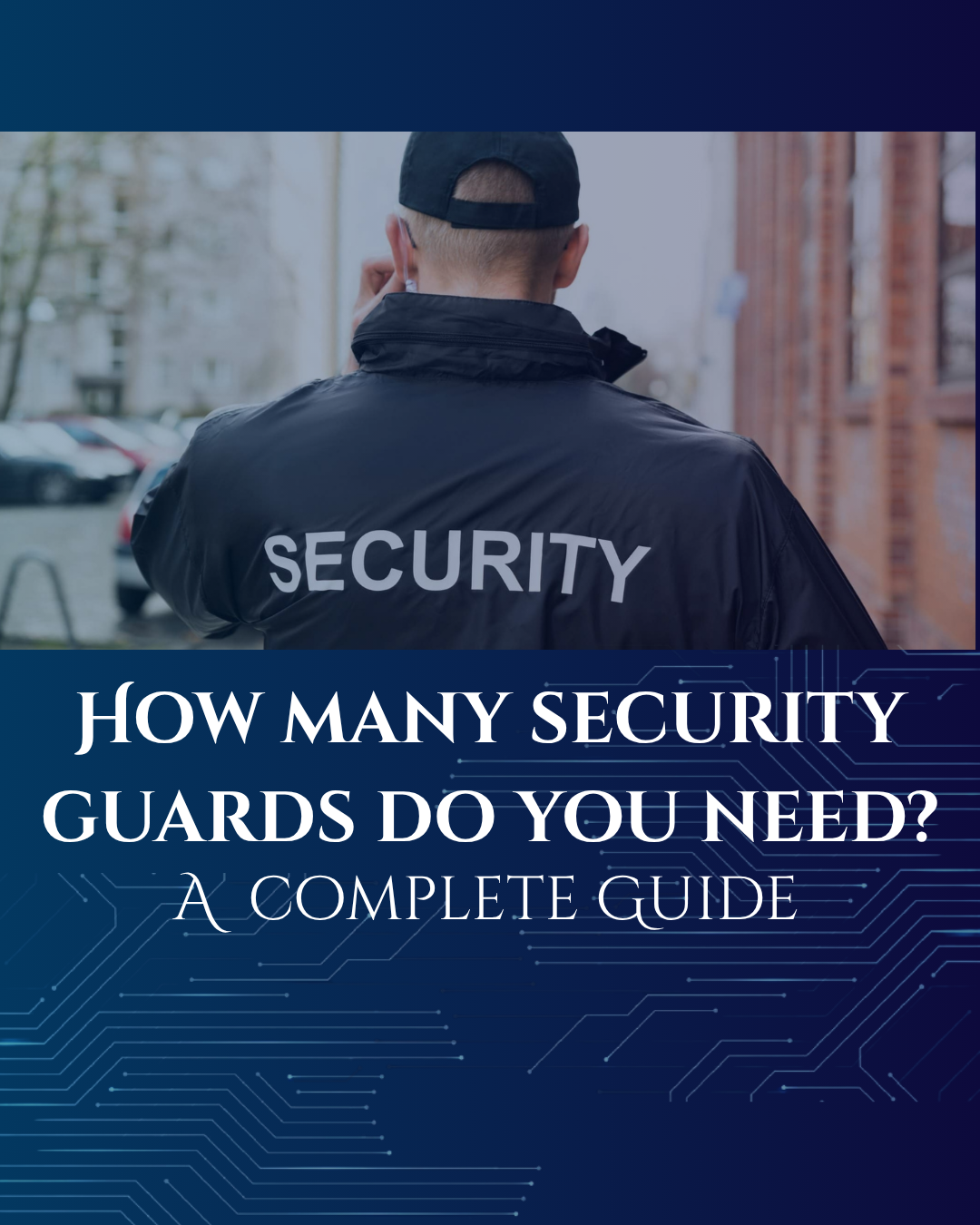
When it comes to protecting your property, people, and assets, one of the most important questions to ask is, ‘How many security guards do you need?’ This decision directly impacts the effectiveness of your security plan and your overall costs. Whether you are managing a residential property, running an office, or operating a large commercial business, understanding the right number of guards is essential. A well-planned security setup not only prevents threats but also creates a safe and professional environment for everyone involved.
Why the Right Number of Guards Matters
Determining How Many Security Guards Do You Need is crucial because security is not just about presence—it is about performance. If you hire too few guards, there will be blind spots in surveillance, slower response times, and increased vulnerability to theft or incidents. On the other hand, hiring too many guards can lead to unnecessary expenses without significantly improving safety. The goal is to strike the right balance where every critical area is covered, risks are minimised, and your investment delivers maximum value. Proper planning ensures better coordination, faster incident handling, and overall operational efficiency.
Key Factors That Affect Guard Requirements
Several key factors play a vital role in deciding how many security guards you need, and each one should be carefully evaluated before making a decision. The size of the property is one of the most obvious considerations. Larger areas require more guards to ensure complete monitoring, especially if there are multiple floors, open grounds, or separate buildings. Another important factor is the number of entry and exit points. Every access point needs to be controlled, and unattended entrances can quickly become security risks.
Risk level is equally important, as properties located in high-risk areas or those handling valuable assets require a stronger security presence. For example, banks, warehouses, and construction sites are more vulnerable to theft or unauthorized access and therefore need more guards. Operating hours also significantly influence guard requirements. A facility that operates 24/7 will need multiple shifts of guards, while a location that operates only during the day may require fewer personnel. Additionally, crowd density plays a major role, especially in places like shopping centres, offices, or event venues where large numbers of people gather daily.
Security Requirements for Residential Properties
Residential security needs vary depending on the type of property and its location. When deciding how many security guards you need for a home, factors such as neighbourhood safety, property size, and family requirements must be considered. A single guard is usually sufficient for daytime monitoring in low-risk areas, while one or two guards may be needed during nighttime for added protection.
For gated communities or apartment complexes, the requirements increase as there are multiple entry points, visitors, and shared spaces. In such cases, guards are typically stationed at main gates, with additional personnel assigned for patrolling. This not only improves safety but also enhances residents’ sense of security and comfort.
Security Needs for Offices and Corporate Spaces
Office environments require a structured approach when determining how many security guards you need. Small offices with limited staff and a single entrance may only need one guard to manage access and monitor activities. However, medium-sized offices often require two to three guards to cover reception, entry points, and parking areas effectively.
Large corporate buildings and multi-floor offices require a more comprehensive security setup. Guards may be needed for access control, visitor management, surveillance monitoring, and emergency response. In such environments, security personnel also play a key role in maintaining discipline, ensuring compliance with company policies, and handling unexpected situations professionally.
Security Planning for Businesses and Commercial Facilities
Commercial properties often have higher security demands due to the nature of their operations. When evaluating how many security guards you need for businesses, it is important to consider the value of goods, customer traffic, and operational risks. Retail stores typically require one or two guards to prevent theft and manage customer flow. Warehouses, on the other hand, need multiple guards for monitoring storage areas, loading zones, and entry points.
Large-scale businesses such as factories, shopping malls, and industrial sites require a well-organised team of guards. These guards are responsible for access control, surveillance, emergency handling, and overall safety management. A strong security presence not only prevents losses but also builds trust among customers, employees, and stakeholders.
Shift Planning and 24/7 Coverage
One of the most important aspects of determining how many security guards you need is understanding shift planning. Security is often required around the clock, and one guard alone cannot cover a full 24-hour period effectively. Typically, three guards are required to cover a single position for 24/7 duty, allowing for proper rotation, rest, and efficiency.
In addition to regular shifts, it is also important to have backup guards available for emergencies, sick leaves, or unexpected situations. Proper scheduling ensures that guards remain alert and perform their duties effectively, reducing the chances of fatigue-related errors.
Impact of Technology on Guard Requirements
Modern security technology has significantly influenced how organisations determine how many security guards you need. Tools such as CCTV cameras, motion sensors, alarm systems, and access control solutions can enhance surveillance and reduce reliance on manpower. These systems allow fewer guards to monitor larger areas more efficiently.
However, technology cannot fully replace human involvement. Security guards are essential for on-ground presence, quick decision-making, and immediate response to incidents. The best approach is to combine technology with trained personnel to create a strong and reliable security system.
Balancing Cost and Security Effectiveness
Cost is always a consideration, but it should never compromise safety. When deciding how many security guards you need, it is important to focus on value rather than just expense. A well-balanced security plan ensures that all critical areas are covered without overspending.
Investing in trained and experienced guards is equally important, as their expertise can make a significant difference in handling real-life situations. Instead of minimising the number of guards to cut costs, the focus should be on optimising resources to achieve maximum protection and efficiency.
Conclusion
There is no one-size-fits-all answer to ‘How Many Security Guards Do You Need?’, as every property has its own unique requirements. By carefully evaluating factors such as property size, risk level, operational hours, and security goals, you can determine the ideal number of guards for your needs. A well-planned security strategy not only protects your assets but also ensures peace of mind, smooth operations, and long-term reliability. Investing in the right number of security guards is ultimately an investment in safety and stability.

No comment